The Great Yorkshire Creature Count: 24 hours in search of the wildlife on our doorsteps took place on Saturday 20th and Sunday 21st June.
Yorkshire Wildlife Trust is on a mission to count all the plants and animals that are hiding in our gardens, yards and window boxes in just 24 hours – and they need our help! https://www.ywt.org.uk/great-yorkshire-creature-count
A number of Barnsley naturalists took up this worthwhile challenge.
Trevor has alerted us to the good news this last week for the river Don with the completion of the Masbrough Weir fish pass at Forge Island in Rotherham.
With Sheffield City Council also finishing the fish pass on Sanderson’s weir, this opens the entire migratory route from the North Sea to spawning grounds in and upstream of Sheffield.
Perhaps soon there will be a sustainable salmon population in the River Don after an absence of around 200 years. An adult salmon was found in the river Don in Sheffield last year so they are on their way.
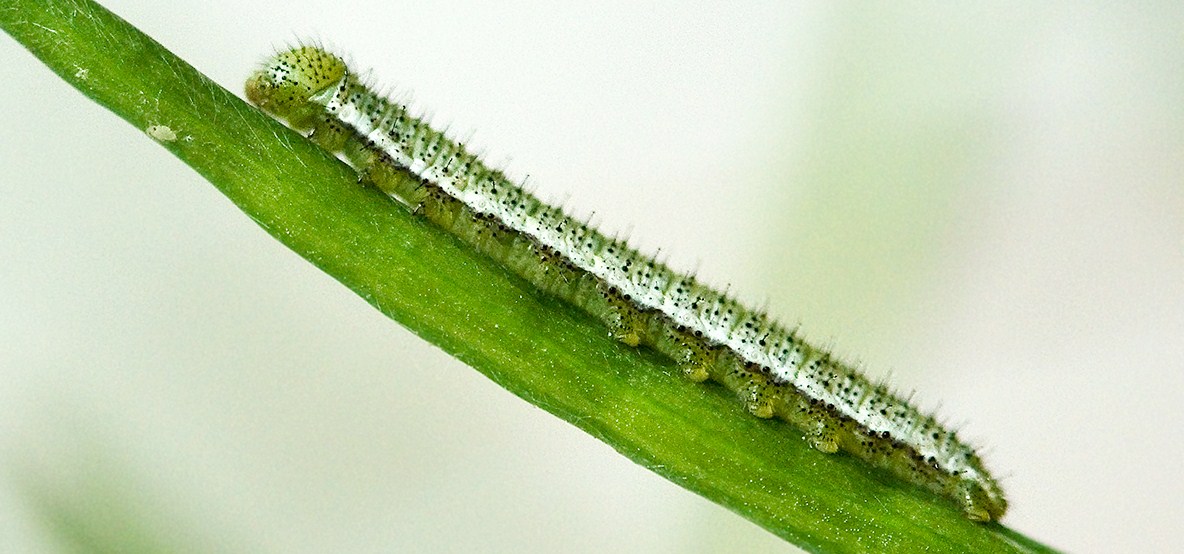
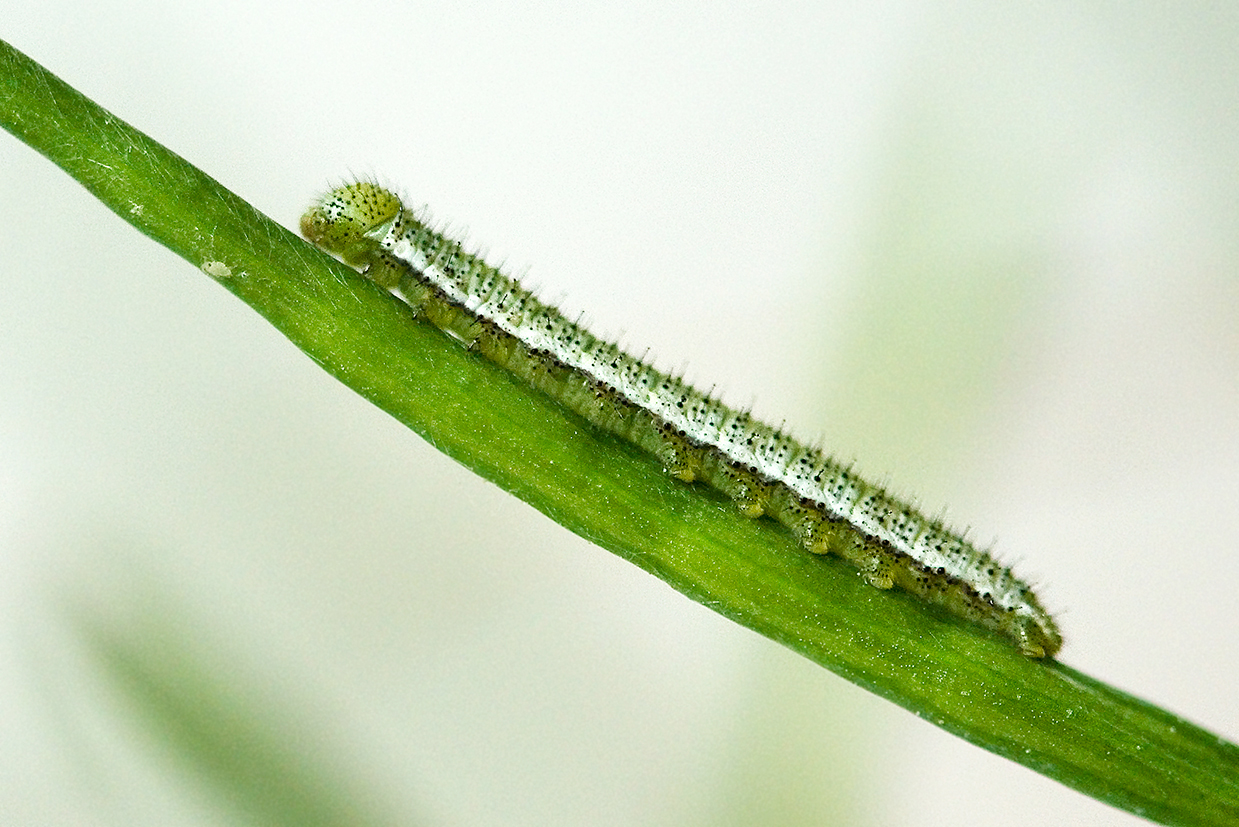
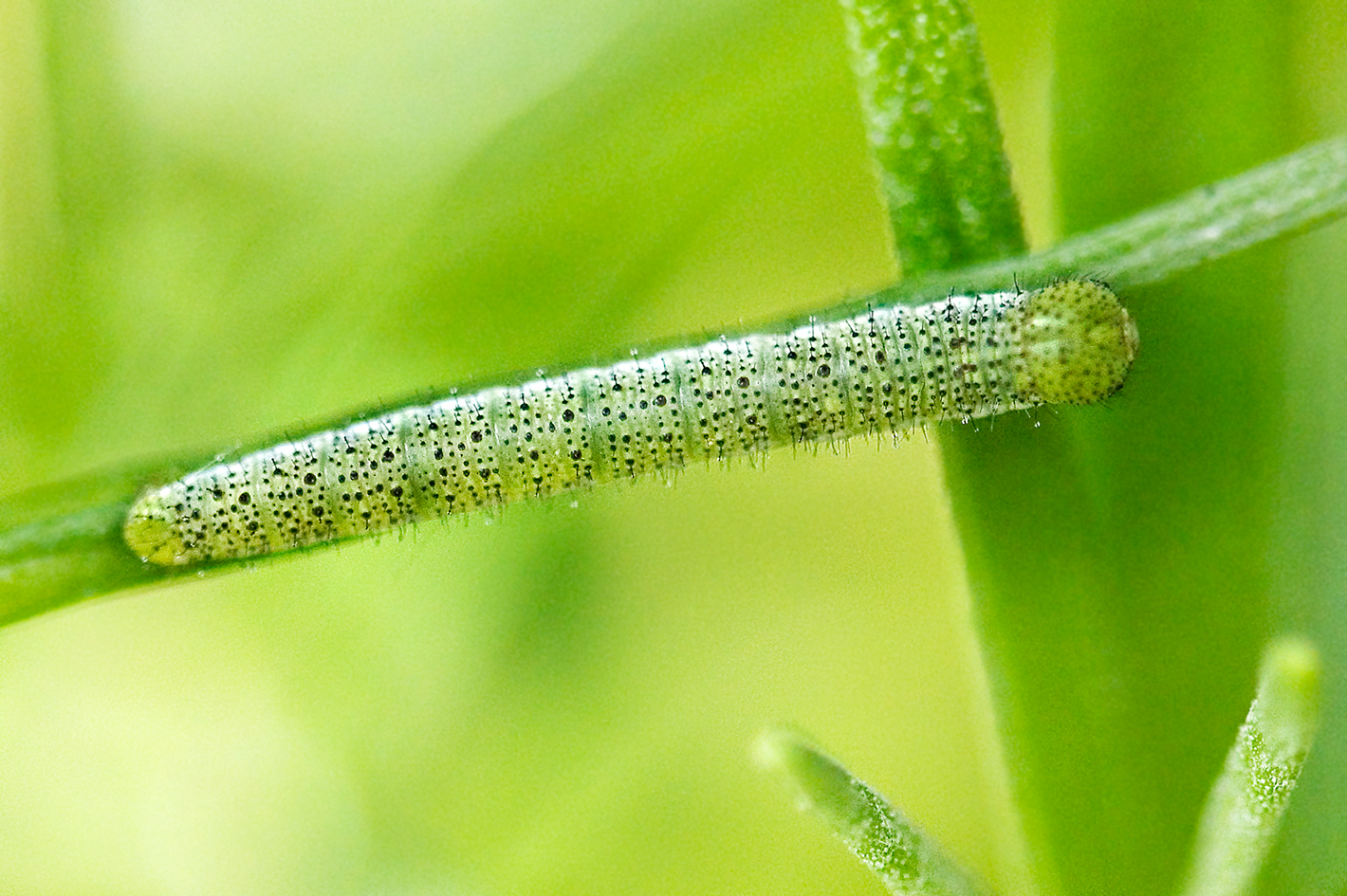
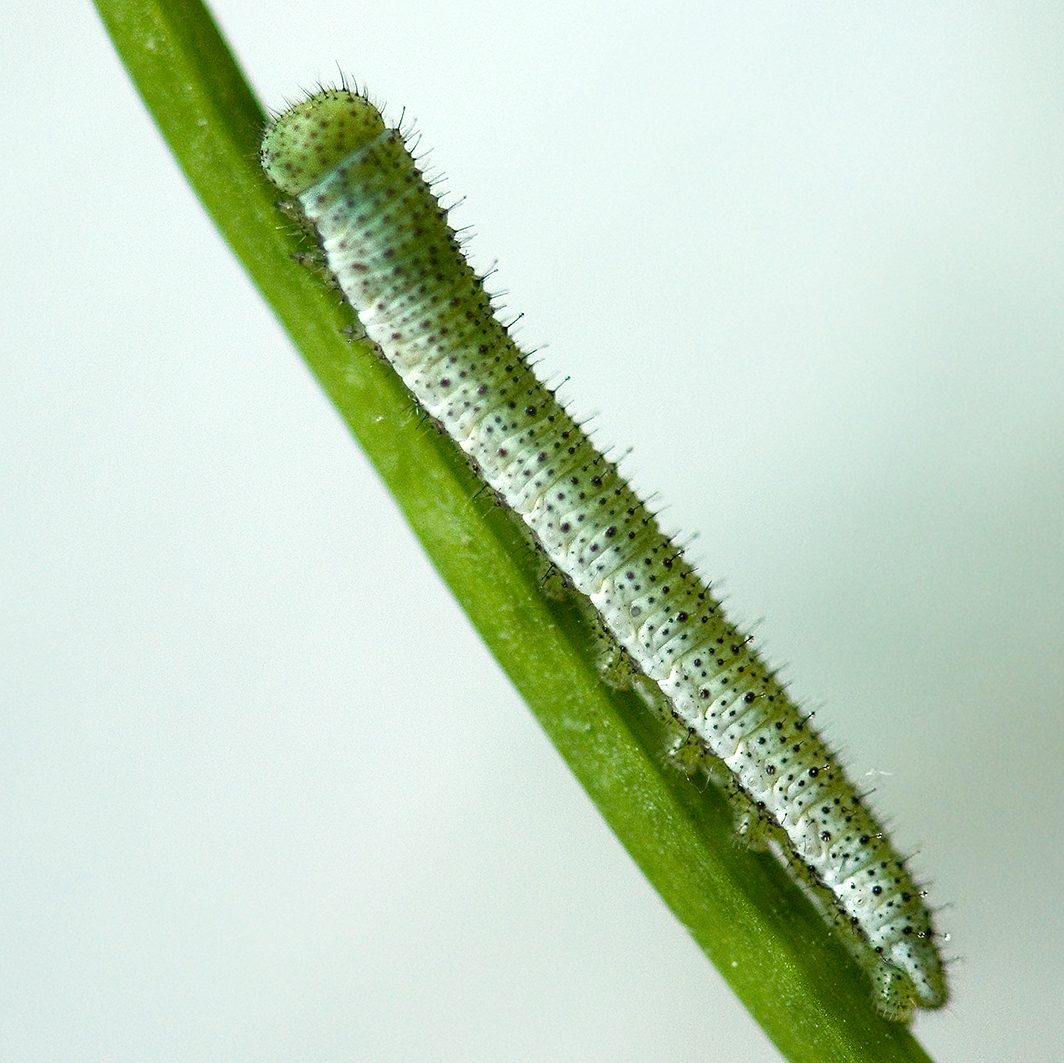
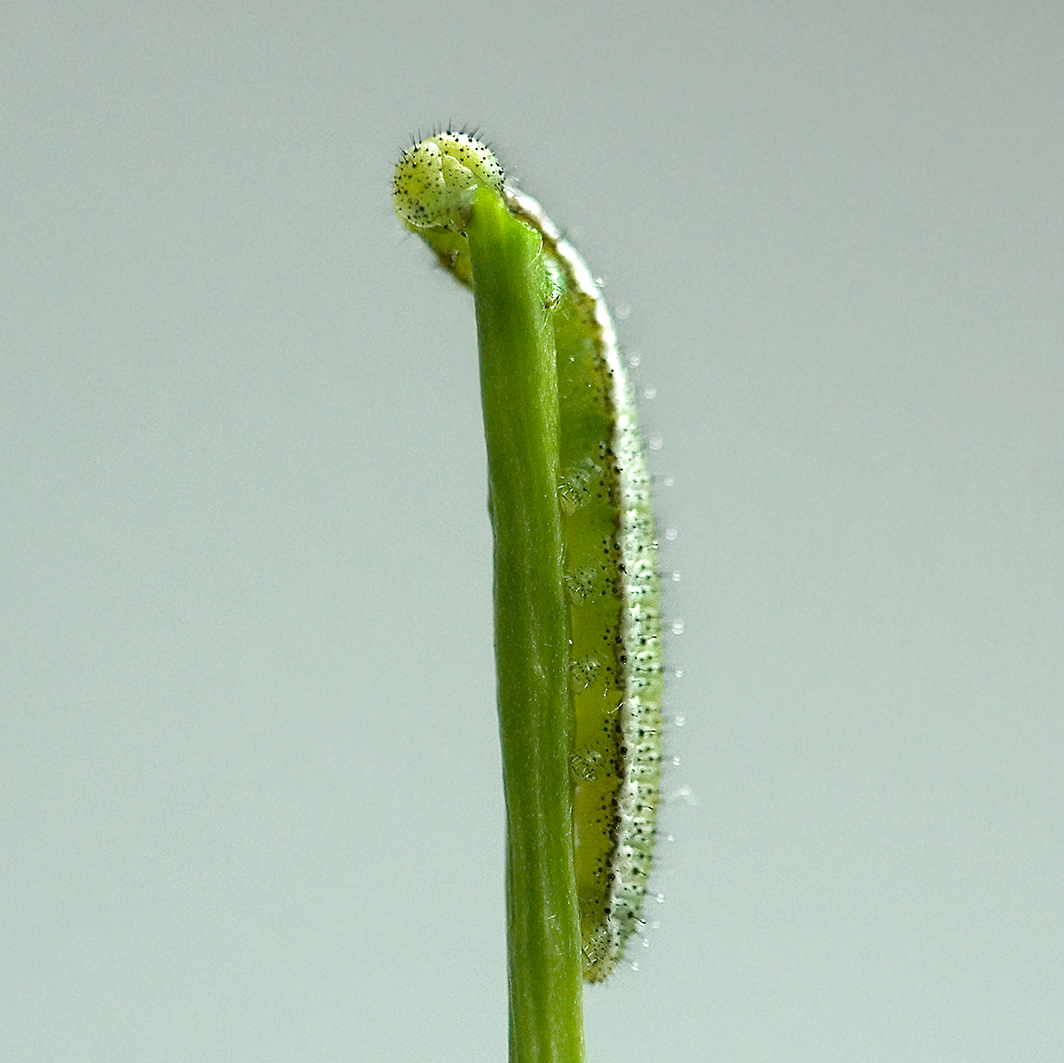
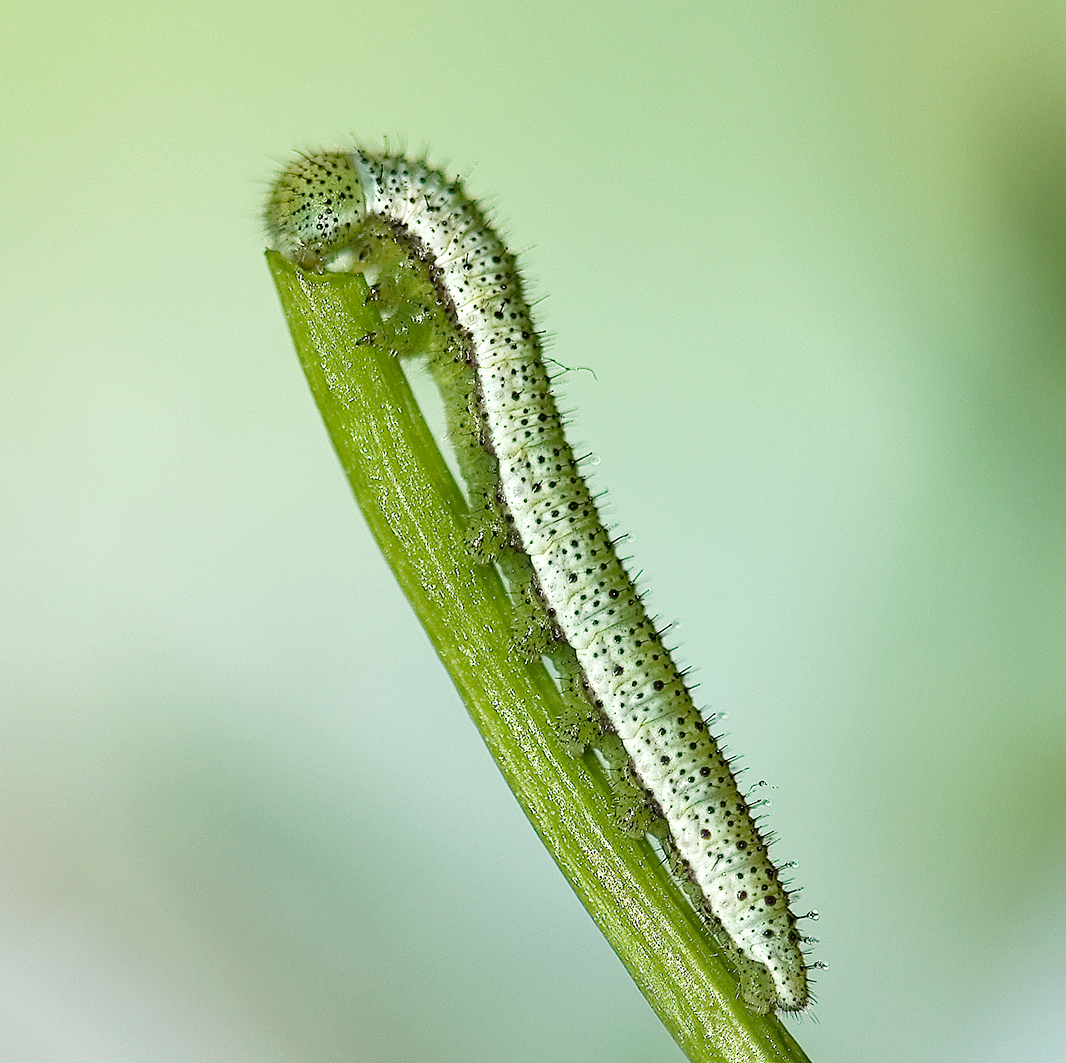
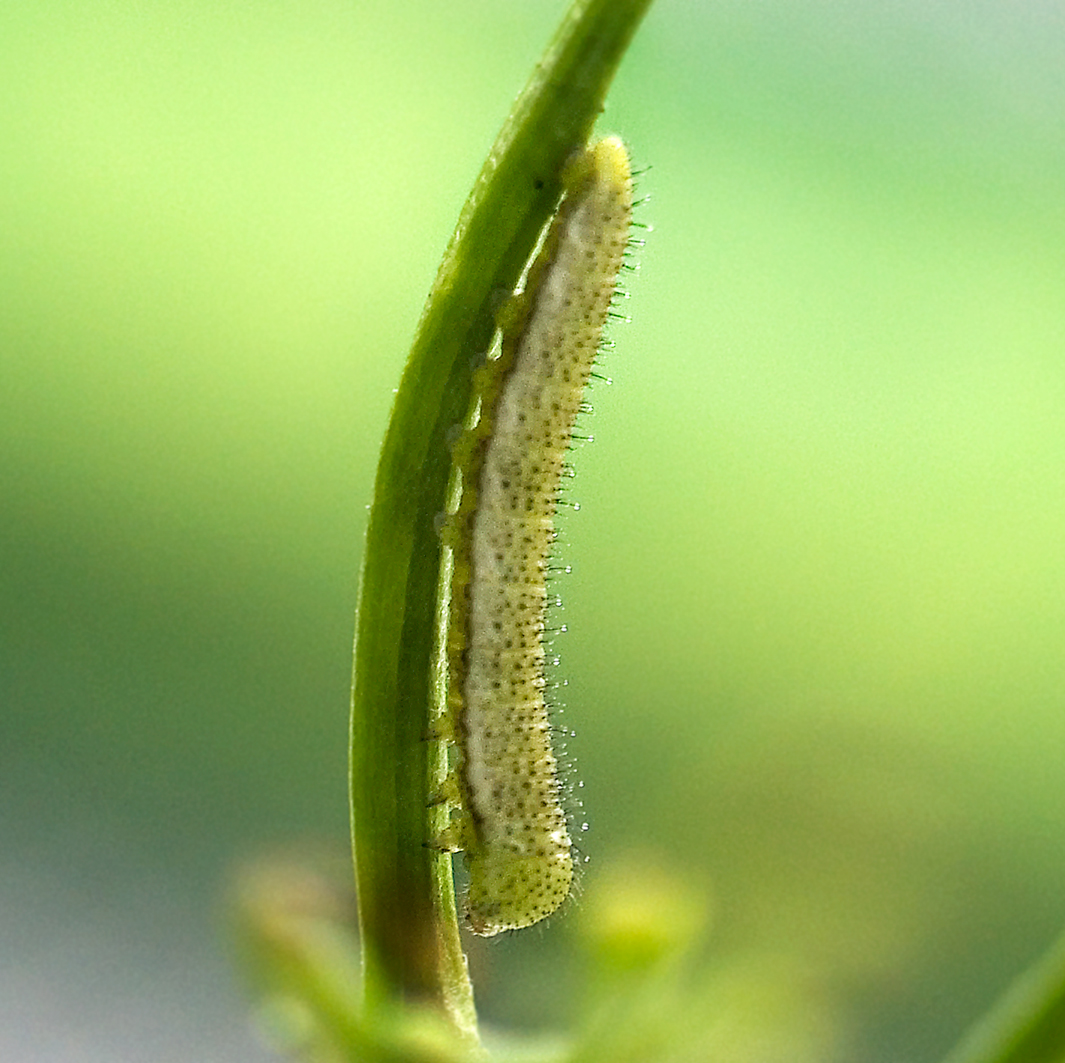
Rearing Orange Tip butterflies. This week, I have started rearing four Orange Tip caterpillars, found on the seed pods of the Garlic Mustard plants in my garden.
The caterpillars are now indoors, in the gauze cage that I had used originally to rear my Painted Ladies a few years ago. They are still on the same plants (in a small vase) and they are munching away, day and night, at the long seed pods and are hopefully free from parasitic flies, birds etc.
Currently about 12mm long, they will develop (hopefully) to about 3.5cm.
Difficult to see and photograph because of their very small size (short and thin). They are well camouflaged, mimicking the seed pods along which they are resting.
You might notice the presence of small clear beads of liquid topping the black hairs on each caterpillar’s back. No one really knows their purpose, perhaps a guard against predators?
The caterpillars will eventually pupate at the 5th (and final) Instar into a Gondola boat-shaped Chrysalis, fastened to a stem with a silken girdle around its waist and a silk pad at its tail end.
Then it’s a long wait until next Spring when they will metamorphose into beautiful adult (Imago) butterflies.
These caterpillars are cannibalistic and the female Orange Tip usually only lays one egg per plant.
I’m hoping to photo-document their progress if I can, that is if they don’t eat each other! Lots of fun! Alwyn.
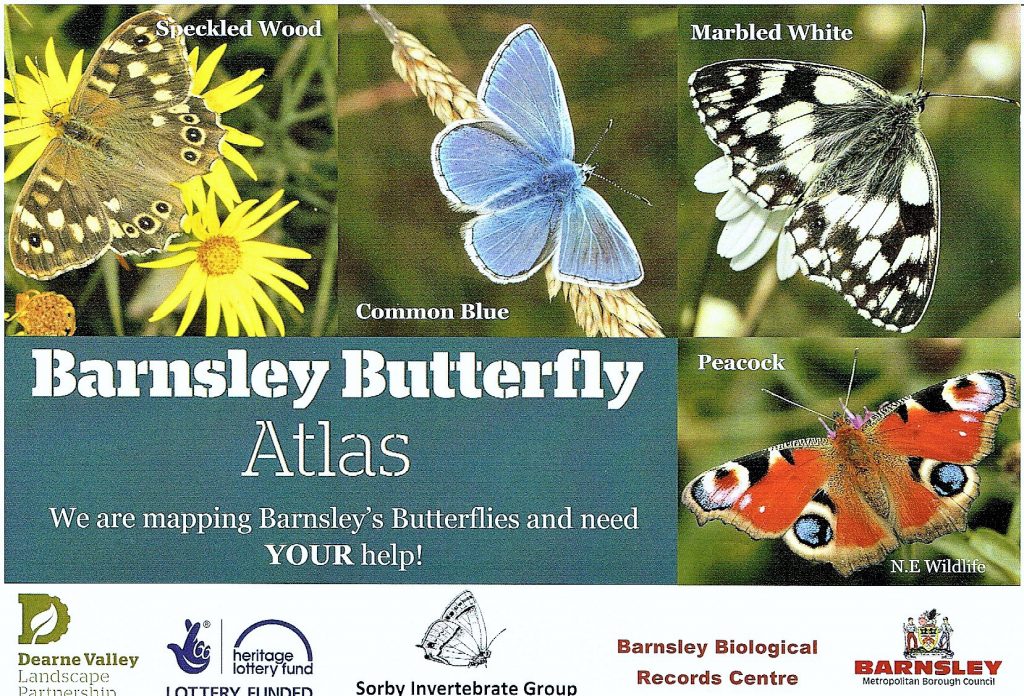
A request for help with the Barnsley Butterfly Atlas …
Following a suggestion from Alwyn, a trustee of the Barnsley Biodiversity Trust, the Barnsley Butterfly Atlas project was launched in May 2017 by Sorby Natural History Society and Barnsley Biological Record Centre, with support from the Dearne Valley Landscape Partnership. The project aims to map the distribution of all the butterfly species found across the area of the borough of Barnsley in the 20 year period from 2000 to 2020. [Perhaps with the lockdown we need an extra year?]
So now we are asked to contribute our records of butterfly sightings … from our usual patch or perhaps somewhere different that has not been recorded so much before.
To get the ball rolling, here are some butterfly records from Peter and Annefie’s walk on Saturday … Date: Saturday 2 May 2020 Location: Falthwaite & Lowe Wood LWS Comment: On Wild Garlic and other flowering plants near Stainborough Dike Grid Reference: 4-figure /1km square: SE3103 [Six-figure reference: from SE318039 to SE314039] Observer: Peter and Annefie Roberts Species: Brimstone (2), Comma (1), Holly Blue (1), Orange-tip (Males & Females, numerous), Small White (numerous), Speckled wood (1).
We will send them to Barnsley Biological Record Centre (BBRC): [email protected]. [Note the change of email address during the lockdown]
Barnsley Nats posts on both twitter [and more occasionally facebook]. You can see what we post, ‘retweet’ and ‘like’ on our social media page.
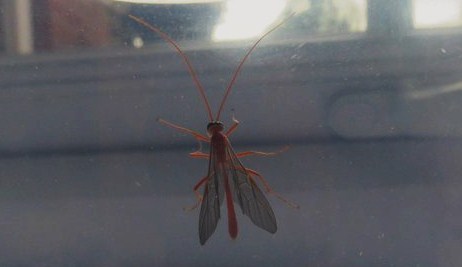
A twitter post tagged @Barnsley_Nats with an image to identify recently had us thinking. Kent and Doug agreed it was a type of ichneumon wasp. However these are notoriously difficult to id at species level without using a microscope …
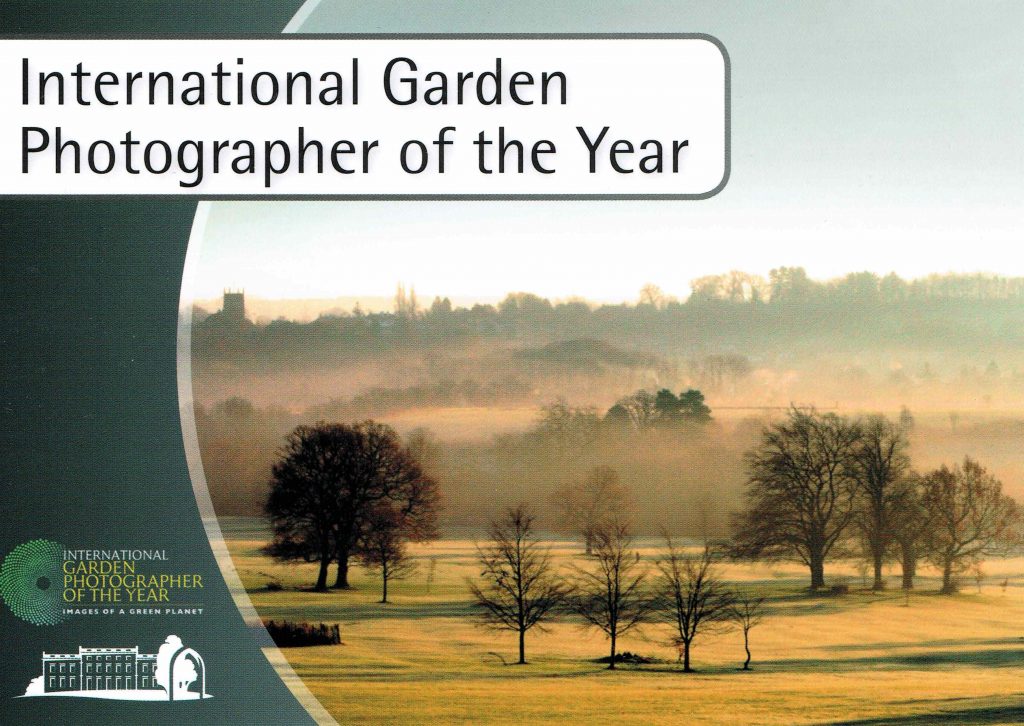
Later this year, the exhibition ‘International Garden Photographer of the Year’, is due at Cannon Hall. Hopefully all open by late August when it arrives here!
The photo competition ‘Beautiful Barnsley’ is a good opportunity to celebrate the landscapes, green spaces and biodiversity of Barnsley, from the moors to the Dearne valley. The competition is now closed so we will now wait to see the results.
May we take this opportunity to wishing everybody a Happy New Year. You are more than welcome to come along and join us for any of our meeting or field visits.
We kick start 2020 with an indoor meeting on January 8th. This will be a presentation by Alwyn Timms; entitled The Discreet World of Barnsley’s Small Blue Butterfly
We also have a field visit on January 11th. Details to be confirmed. And on January 22nd our indoor meeting is a members short presentations. This is very much a nature wide array of topics.
Our updated 2020 Spring Summer Programme will be available for viewing shortly.
“Sedges have edges, rushes are round, grasses have knees that bend to the ground.”
This little witty rhyme may be used to separate these three plants into there correct category. The stems of sedges and rushes are solid; in cross-section the stems of rushes are round, while those of sedges are triangular and so have edges.
Wednesday 2nd October We are looking forward to seeing you all at the first indoor meeting of our Autumn and Winter Programme. As usual, we start with a members evening sharing knowledge and observations. This of a less formal structure than the meetings with guest speakers. Very much a catch up and news of what everyone has spotted over the break; multi-topic and hopefully with some interesting finds, images and stories. Please take part: it’s always really interesting to hear from a variety of people.
Our printed Autumn and Winter Programme will also be available.
Our Autumn and Winter Programme starts with an indoor meeting on Wednesday October 2nd; Presentation by Members. A chance to have a catch-up on what our members have been doing over our summer recess.
We are having to change to date of the field visit that was planned for this Saturday, July 13th. The new date for the Dearne Valley Meadows field visit is Saturday July 20th. Sorry for the late information on this.
Planning for our Autumn Winter programme is taking place. If anybody would like us to include something please drop us a line. As usual we are aiming for an array of field visits and indoor meetings. Nature inspired along with the many scientific processes behind them.
We are working on our next round of programme events for our indoor meetings and field visits.
If there is anything you would like us to try and arrange please contact us. We are always open to ideas.
While our outdoor field visits tend to concentrate on the plant and animals we come across; and many are based on a specific topic; our indoor meetings often include a wide range of topics that takes into account the very diverse aspect that influence the nature we experience. With site history, human activities and planning being just the tip of the iceberg.